How to speed up muscle strain recovery: proven methods that actually work
Discover the proven, science-backed methods to speed up muscle strain recovery. From early loading protocols to nutrition strategies and recovery tools — learn what actually works.
If you’ve pulled a muscle, the first question you’re asking is: how long is this going to take? The second is: what can I do to make it faster?
The good news is that knowing how to speed up muscle strain recovery is one of the most research-rich areas in sports medicine. We know a great deal about what works, what doesn’t, and what actually slows you down despite feeling productive.
This guide covers the proven, evidence-based methods — organized from the first hours post-injury all the way through your return to full training.
Understanding what you’re healing
Before diving into methods, it’s worth understanding what a muscle strain actually is. According to the National Institutes of Health, a strain occurs when muscle fibers are overstretched or forced to contract under excessive load, causing them to tear.[1] The extent of the damage is classified in three grades:
Recovery methods apply across all grades, but the timeline and intensity of each method must match your injury grade. Applying aggressive loading protocols to a Grade 2 or 3 tear before it’s ready is one of the most common and costly mistakes in muscle strain rehabilitation.
The first 72 hours: what to do immediately
The actions you take immediately after injury set the tone for the entire recovery. Here’s exactly what the current evidence supports:
8 proven methods to speed up muscle strain recovery
This is the single most impactful thing you can do to speed up muscle strain recovery. A 2021 systematic review in the British Journal of Sports Medicine found that early, supervised loading consistently outperformed rest in both recovery speed and re-injury prevention.[2] Start with isometric exercises, progress to isotonic, then sport-specific loading.
Muscle repair is fundamentally a protein-building process. Without adequate protein, your body cannot efficiently synthesize new muscle fibers or repair damaged collagen. Target 1.6–2.2g of protein per kg of bodyweight per day, distributed across 4–5 meals, as recommended by the International Society of Sports Nutrition.[3] Prioritize leucine-rich sources: whey protein, eggs, chicken breast, Greek yogurt, and cottage cheese.
Growth hormone — the primary driver of muscle regeneration — is secreted almost exclusively during slow-wave sleep. Studies show sleep deprivation below 6 hours reduces growth hormone secretion by up to 60%, directly blunting tissue repair capacity. Strategies to improve sleep quality during recovery:
- Maintain a consistent sleep schedule (within ±30 minutes)
- Keep the bedroom cool (65–68°F / 18–20°C)
- Avoid alcohol — it suppresses deep sleep stages
- Limit screen exposure 60 minutes before bed
After the initial 48–72 hours, heat becomes more beneficial than ice for most muscle strains. Heat dilates blood vessels, increasing nutrient and oxygen delivery; reduces muscle spasm and stiffness; and improves tissue extensibility before mobility work. Apply a heat pack for 15–20 minutes, 2–3 times per day from day 3 onward. Warm water immersion (hydrotherapy) also allows gentle movement under load, further accelerating recovery.
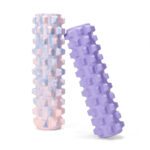
Direct foam rolling over a fresh tear disrupts healing tissue — avoid it for the first 2–3 weeks. Instead, rolling adjacent muscles reduces the compensatory tightness that develops as surrounding muscles over-recruit to protect the injured area. For a hamstring strain: roll calves, glutes, and TFL. For a quad strain: roll hip flexors and IT band. From week 3, gentle rolling over the injury site with a quality foam roller helps break down early scar tissue adhesions.
Several supplements have meaningful evidence for supporting muscle strain recovery, as reviewed in sports nutrition research:[4]
Once you return to light activity, compression sleeves provide ongoing benefits that directly support your goal of speeding up muscle strain recovery:
- Reduce swelling during and after exercise
- Improve proprioception (joint position sense) during rehab
- Provide psychological confidence when returning to training
- May reduce delayed onset muscle soreness after early training sessions
Most muscle strains — and re-injuries — result from training errors. Use the recovery period to audit your program. Common errors include:
- Increasing weekly training volume by more than 10% per week
- Insufficient dynamic warm-up before high-intensity sessions
- Muscle imbalances between antagonist groups (e.g., hamstrings vs. quads)
- Neglecting soft tissue work and mobility training between sessions
Get the right tools to support every stage of your recovery — from compression and foam rollers to resistance bands for progressive rehab.
Shop recovery tools at WRT →What doesn’t work (despite being widely used)
Return to training: the right criteria
Time alone is not sufficient to determine readiness. The American Orthopaedic Society for Sports Medicine recommends functional testing over time-based clearance alone.[5]
- Full, pain-free range of motion in the affected muscle
- Limb Symmetry Index (LSI) >90% on strength testing
- Ability to perform sport-specific movements without compensation
- No pain during high-load exercises targeting the injured muscle
Frequently asked questions
The most effective methods to speed up muscle strain recovery are: early progressive loading, optimized protein intake, quality sleep, strategic heat therapy, and systematic progression back to full training. Recovery tools like resistance bands, compression sleeves, and foam rollers play a meaningful supportive role — but they work best as part of a structured, evidence-based rehabilitation approach. Follow the process, don’t skip steps, and your return to full strength will be both faster and more durable.
- National Institutes of Health — Muscle Strain Classification and Pathophysiology
- British Journal of Sports Medicine — Early Loading vs. Rest: Systematic Review of Muscle Strain Recovery
- International Society of Sports Nutrition — Protein Intake Recommendations for Athletic Recovery
- PubMed / Sports Nutrition Research — Nutritional Strategies for Muscle Injury Recovery
- American Orthopaedic Society for Sports Medicine — Return-to-Sport Criteria Following Muscle Strain