injured muscle recovery time

Injured muscle recovery time: the complete guide to faster healing

A true complete guide to injured muscle recovery time — covering healing phases, timelines by injury type, and evidence-based strategies to recover faster and return to training safely.

✓ Reviewed by a certified sports medicine professional Medical content — for educational use only
Important: This content is educational and does not substitute for professional medical diagnosis or treatment. Always consult a qualified healthcare provider before beginning any rehabilitation program.

Muscle injuries are among the most common musculoskeletal complaints, affecting recreational exercisers and elite athletes alike. But injured muscle recovery time is rarely well understood — most people either rush back too early or rest for far longer than necessary.

This complete guide covers exactly what happens when a muscle is injured, how long recovery realistically takes for different injury types and locations, and what the science says about recovering faster without compromising tissue quality.

Understanding muscle injuries

Muscles are made up of thousands of individual fibers bundled within a connective tissue sheath. When these fibers are overloaded — through sudden force, repetitive strain, or direct trauma — they tear at varying depths. According to the National Institutes of Health, the extent of the damage determines both your symptoms and your recovery timeline.[1]

Types of muscle injuries

Acute strains
Sudden tears from explosive movements, heavy lifting, or impact. The most common sports injury type across all activity levels.
DOMS
Delayed onset muscle soreness from unaccustomed exercise. Microscopic damage only — not a true injury. Resolves within 24–72 hours.
Contusions
Bruising from direct impact that compresses muscle fibers. Recovery depends on depth and severity of the compression.
Avulsion injuries
Muscle or tendon tears away from the bone. Serious injuries that frequently require surgical repair and specialist management.

Injured muscle recovery time by grade

Injury severity is classified in three grades, each with distinct recovery timelines. These benchmarks are drawn from clinical guidelines published by the Journal of Orthopaedic & Sports Physical Therapy.[2]

Grade 1 — mild
7–21 days
Modified activity possible within 1 week
Grade 2 — partial tear
3–8 weeks
Structured rehab required before sport return
Grade 3 — complete rupture
2–6 months
May require surgical repair

Grade 1 (mild strain): 7–21 days

Minor fiber damage with intact muscle architecture. Pain is localized and manageable. Strength loss is minimal. Most people can resume modified activity within a week — but returning to full training before 2 weeks significantly increases re-injury risk.

Grade 2 (partial tear): 3–8 weeks

Significant fiber disruption with functional loss. Bruising and swelling are common. A structured rehabilitation program spanning 4–8 weeks is required before safe return to sport. This is the most frequently seen presentation in sports medicine clinics.

Grade 3 (complete rupture): 2–6 months

Full-thickness tear of the muscle or muscle-tendon junction. Severe pain, gross swelling, and inability to generate force. May require surgical repair depending on the muscle involved. Injured muscle recovery time for Grade 3 injuries consistently spans 3–6 months even with optimal management.

Recovery time by muscle location

High-demand muscles that cross two joints — like the hamstrings and rectus femoris — heal more slowly than single-joint muscles, due to greater mechanical stress during daily activity and rehabilitation.

Hamstrings 3 weeks – 6 months
Quadriceps 2 weeks – 4 months
Calf (gastrocnemius) 3 weeks – 5 months
Hip flexors 1–8 weeks
Rotator cuff 4 weeks – 6+ months
Lumbar erector spinae 1–6 weeks

The biological stages of muscle healing

Understanding the biology of muscle repair helps you match your rehabilitation approach to what your body is actually doing at each stage. This framework is well established in sports medicine literature.[3]

D1–5
Stage 1 — destruction & inflammation
Damaged fibers undergo necrosis. Neutrophils and macrophages invade the area, clearing cellular debris. This phase is painful and essential — it should not be aggressively suppressed with prolonged NSAID use. Ice, compression, and elevation are appropriate for symptom management.
D3–21
Stage 2 — repair & regeneration
Satellite cells — the muscle’s resident stem cells — activate and begin forming new fibers. Fibroblasts lay down collagen to bridge the gap. Mechanical loading during this phase guides fibers to align properly along lines of force, producing stronger, more functional scar tissue.
Wk3+
Stage 3 — remodeling
Immature scar tissue matures, strengthens, and becomes more organized. This phase can last up to 6 months. Without progressive loading, scar tissue remains disorganized, weak, and significantly more prone to re-injury than the original muscle.

8 evidence-based strategies to speed up injured muscle recovery time

1. Follow the P.E.A.C.E. & L.O.V.E. protocol

Updated from the outdated RICE method, P.E.A.C.E. & L.O.V.E. reflects the current best evidence for soft tissue injury management, as published in the British Journal of Sports Medicine.[4]

P.E.A.C.E. & L.O.V.E. — current best practice
Protect — avoid pain-provoking activity 1–3 days
Elevate — raise limb to reduce swelling
Avoid anti-inflammatories — let inflammation work
Compress — use bandages or sleeves
Educate — understand the recovery process
Load — begin early, pain-guided movement
Optimism — positive expectation improves outcomes
Vascularisation — low-impact cardio for blood flow
Exercise — restore mobility, strength, proprioception
STRATEGY 02
Begin loading early
Early, controlled mechanical loading accelerates satellite cell activation and improves collagen fiber alignment. Even isometric contractions in the first days post-injury preserve muscle mass and improve recovery quality. Resistance bands are ideal for safe early loading before returning to free weights.
STRATEGY 03
Prioritize sleep
Growth hormone (GH) — secreted in pulses during slow-wave sleep — is the primary driver of muscle regeneration. Research shows athletes sleeping less than 6 hours per night have significantly blunted recovery compared to those sleeping 8–9 hours. Sleep is an active recovery tool, not a passive one.
STRATEGY 04
Optimize protein intake
Consume 1.6–2.2g of protein per kg of bodyweight daily, as recommended by the International Society of Sports Nutrition.[5] Focus on leucine-rich sources (whey, eggs, meat). Spreading intake across 4–5 meals is more effective than large, infrequent servings.
STRATEGY 05
Use resistance bands for early rehabilitation
Resistance bands provide linear variable resistance — the muscle works hardest in its strongest position, making them ideal for early-stage rehab. Browse WRT’s rehabilitation resistance bands selected for injury recovery progressions.
STRATEGY 06
Apply heat after the acute phase
From 72 hours post-injury, heat application (15–20 minutes, 2–3 times daily) improves local blood flow and delivers oxygen and nutrients to healing tissue. Heat packs and warm water immersion are both effective options.
STRATEGY 07
Address the root cause
Most muscle injuries result from training load errors, muscle imbalances, inadequate warm-up, or insufficient recovery. Using the recovery period to identify and correct these factors significantly reduces re-injury risk when you return to full training.
STRATEGY 08
Progress systematically with foam rolling
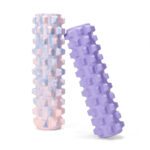
From week 2 onward, use a foam roller on adjacent muscles (not directly over the tear) to reduce compensatory tension. A limb symmetry index of >90% on strength testing is the recommended threshold before returning to sport.

Support your recovery with the right tools — resistance bands, foam rollers, and compression gear built for rehabilitation.

Shop recovery tools at WRT →

Nutrition for muscle repair

What you eat directly affects how quickly and how well your injured muscle heals. These key nutrients are backed by evidence from sports nutrition research.[6]

Protein
1.6–2.2g/kg/day. Prioritize leucine-rich sources: whey, eggs, chicken, Greek yogurt.
Vitamin C
Essential for collagen synthesis. Found in citrus, berries, and bell peppers. 500–1000mg/day during recovery.
Omega-3 fatty acids
Modulate inflammation. Found in fatty fish, flaxseed, and walnuts. 2–4g EPA+DHA daily.
Creatine
Emerging evidence shows creatine reduces muscle atrophy during immobilization. 3–5g/day.
Zinc
Supports immune function and tissue repair. Found in meat, shellfish, legumes, and seeds.
Vitamin D
Deficiency is associated with impaired muscle recovery. Supplement if deficient, especially in low-sunlight climates.

When to seek medical evaluation

Not all muscle injuries can be managed conservatively. Seek prompt medical attention if:

⚠ Seek immediate medical attention if you experience:
  • An audible snap or pop at the time of injury
  • Inability to bear weight or use the affected limb
  • Bruising that is extensive and rapidly spreading
  • Numbness, tingling, or weakness beyond the injured muscle
  • No improvement after 5–7 days of self-care

The American Orthopaedic Society for Sports Medicine recommends imaging (ultrasound or MRI) for any Grade 2 or above injury that does not improve within the expected timeframe.[7]

Long-term prognosis

The majority of muscle injuries — even significant Grade 2 tears — heal completely with proper rehabilitation. The key determinant of long-term outcomes is not the severity of the initial injury, but the quality of the rehabilitation process.

Scar tissue that forms in a mechanically loaded environment is stronger, more elastic, and more resistant to re-injury than scar tissue that forms during passive rest. This is why structured rehab always outperforms bed rest — regardless of injury grade.

The bottom line

Injured muscle recovery time ranges from one week for minor strains to six months or more for complete ruptures. The critical factors are: understanding your injury grade, following a structured rehabilitation protocol, loading the tissue progressively, and supporting recovery with optimal nutrition and sleep. Rushing recovery is the most costly mistake — not in time lost, but in the months of setbacks that follow a re-injury. Equip yourself with the right recovery tools and follow the process.

Sources & references
  1. National Institutes of Health — Muscle Strain Classification and Management
  2. Journal of Orthopaedic & Sports Physical Therapy — Clinical Rehabilitation Guidelines for Muscle Injuries
  3. British Journal of Sports Medicine — Stages of Muscle Healing and Tissue Remodeling
  4. British Journal of Sports Medicine — P.E.A.C.E. & L.O.V.E.: Updated Soft Tissue Injury Protocol
  5. International Society of Sports Nutrition — Protein Recommendations for Injured Athletes
  6. PubMed / Sports Nutrition Research — Nutrition and Muscle Injury Recovery
  7. American Orthopaedic Society for Sports Medicine — Imaging Guidelines for Muscle Injuries
Disclaimer: This article is for educational and informational purposes only. It does not constitute medical advice. Please consult a qualified healthcare professional for any injury evaluation or treatment plan.

Leave a Reply

Your email address will not be published. Required fields are marked *