Injured muscle recovery time: the complete guide to faster healing
A true complete guide to injured muscle recovery time — covering healing phases, timelines by injury type, and evidence-based strategies to recover faster and return to training safely.
Muscle injuries are among the most common musculoskeletal complaints, affecting recreational exercisers and elite athletes alike. But injured muscle recovery time is rarely well understood — most people either rush back too early or rest for far longer than necessary.
This complete guide covers exactly what happens when a muscle is injured, how long recovery realistically takes for different injury types and locations, and what the science says about recovering faster without compromising tissue quality.
Understanding muscle injuries
Muscles are made up of thousands of individual fibers bundled within a connective tissue sheath. When these fibers are overloaded — through sudden force, repetitive strain, or direct trauma — they tear at varying depths. According to the National Institutes of Health, the extent of the damage determines both your symptoms and your recovery timeline.[1]
Types of muscle injuries
Injured muscle recovery time by grade
Injury severity is classified in three grades, each with distinct recovery timelines. These benchmarks are drawn from clinical guidelines published by the Journal of Orthopaedic & Sports Physical Therapy.[2]
Grade 1 (mild strain): 7–21 days
Minor fiber damage with intact muscle architecture. Pain is localized and manageable. Strength loss is minimal. Most people can resume modified activity within a week — but returning to full training before 2 weeks significantly increases re-injury risk.
Grade 2 (partial tear): 3–8 weeks
Significant fiber disruption with functional loss. Bruising and swelling are common. A structured rehabilitation program spanning 4–8 weeks is required before safe return to sport. This is the most frequently seen presentation in sports medicine clinics.
Grade 3 (complete rupture): 2–6 months
Full-thickness tear of the muscle or muscle-tendon junction. Severe pain, gross swelling, and inability to generate force. May require surgical repair depending on the muscle involved. Injured muscle recovery time for Grade 3 injuries consistently spans 3–6 months even with optimal management.
Recovery time by muscle location
High-demand muscles that cross two joints — like the hamstrings and rectus femoris — heal more slowly than single-joint muscles, due to greater mechanical stress during daily activity and rehabilitation.
The biological stages of muscle healing
Understanding the biology of muscle repair helps you match your rehabilitation approach to what your body is actually doing at each stage. This framework is well established in sports medicine literature.[3]
8 evidence-based strategies to speed up injured muscle recovery time
1. Follow the P.E.A.C.E. & L.O.V.E. protocol
Updated from the outdated RICE method, P.E.A.C.E. & L.O.V.E. reflects the current best evidence for soft tissue injury management, as published in the British Journal of Sports Medicine.[4]
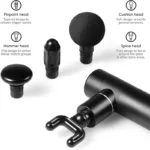
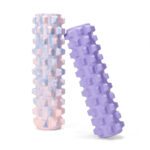
Support your recovery with the right tools — resistance bands, foam rollers, and compression gear built for rehabilitation.
Shop recovery tools at WRT →Nutrition for muscle repair
What you eat directly affects how quickly and how well your injured muscle heals. These key nutrients are backed by evidence from sports nutrition research.[6]
When to seek medical evaluation
Not all muscle injuries can be managed conservatively. Seek prompt medical attention if:
- An audible snap or pop at the time of injury
- Inability to bear weight or use the affected limb
- Bruising that is extensive and rapidly spreading
- Numbness, tingling, or weakness beyond the injured muscle
- No improvement after 5–7 days of self-care
The American Orthopaedic Society for Sports Medicine recommends imaging (ultrasound or MRI) for any Grade 2 or above injury that does not improve within the expected timeframe.[7]
Long-term prognosis
The majority of muscle injuries — even significant Grade 2 tears — heal completely with proper rehabilitation. The key determinant of long-term outcomes is not the severity of the initial injury, but the quality of the rehabilitation process.
Scar tissue that forms in a mechanically loaded environment is stronger, more elastic, and more resistant to re-injury than scar tissue that forms during passive rest. This is why structured rehab always outperforms bed rest — regardless of injury grade.
Injured muscle recovery time ranges from one week for minor strains to six months or more for complete ruptures. The critical factors are: understanding your injury grade, following a structured rehabilitation protocol, loading the tissue progressively, and supporting recovery with optimal nutrition and sleep. Rushing recovery is the most costly mistake — not in time lost, but in the months of setbacks that follow a re-injury. Equip yourself with the right recovery tools and follow the process.
- National Institutes of Health — Muscle Strain Classification and Management
- Journal of Orthopaedic & Sports Physical Therapy — Clinical Rehabilitation Guidelines for Muscle Injuries
- British Journal of Sports Medicine — Stages of Muscle Healing and Tissue Remodeling
- British Journal of Sports Medicine — P.E.A.C.E. & L.O.V.E.: Updated Soft Tissue Injury Protocol
- International Society of Sports Nutrition — Protein Recommendations for Injured Athletes
- PubMed / Sports Nutrition Research — Nutrition and Muscle Injury Recovery
- American Orthopaedic Society for Sports Medicine — Imaging Guidelines for Muscle Injuries