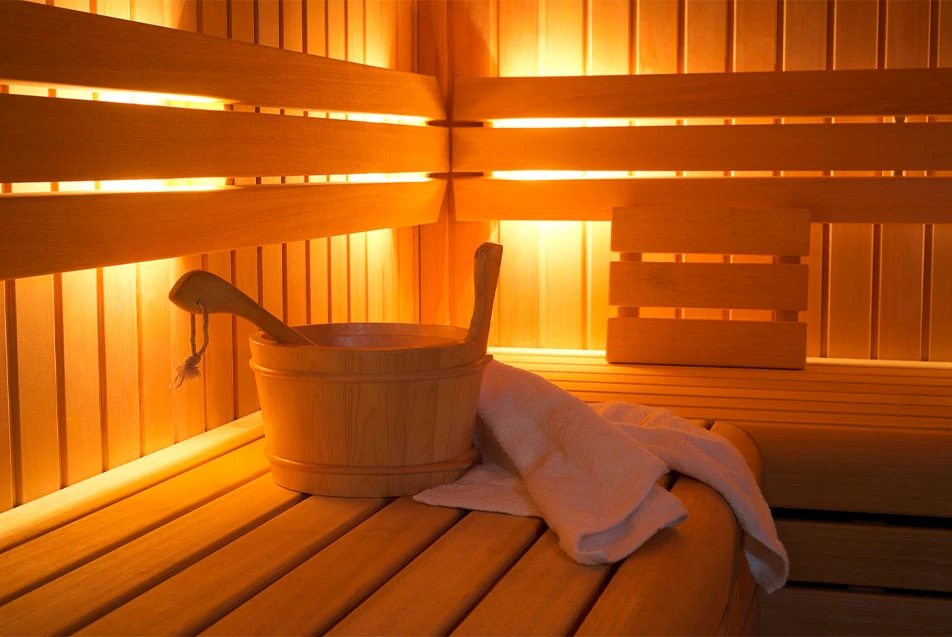
sauna for muscle recovery
Sauna for muscle recovery: does it really help or is it overhyped?
Does sauna actually help muscle recovery or is it just a wellness trend? We break down the science — heat shock proteins, inflammation, blood flow, and how to use sauna effectively for recovery.
✓ Reviewed by a certified sports science professional
Medical content — for educational use only
Important: This article is for educational purposes only and does not constitute medical advice. Individuals with medical conditions should consult their healthcare provider before beginning sauna use.
Saunas have been used for centuries across cultures for relaxation, social ritual, and perceived health benefits. But in recent years, sauna for muscle recovery has become a hot topic in performance and sports medicine circles — driven by high-profile athletes advocating for heat therapy and a growing body of research exploring its physiological effects.
So does the science support it? Is sauna genuinely effective for muscle recovery, or is it a wellness trend amplified by social media?
The honest answer: it helps — but context matters enormously. Sauna is a legitimate evidence-backed adjunct recovery tool, not a magic solution. Used correctly alongside sleep, nutrition, and progressive loading, it can meaningfully accelerate adaptation and reduce soreness. Used as a substitute for the fundamentals, it delivers modest benefits at best.
The physiology of heat exposure
To evaluate whether sauna for muscle recovery works, you need to understand what heat actually does to the body. When you enter a traditional Finnish sauna (80–100°C), your body triggers a cascade of physiological adaptations documented in The Journal of Physiology.[1]
Heart rate increases to 100–150 bpm within minutes — similar to moderate aerobic exercise. Cardiac output rises, and blood is redirected from the core to the periphery to dissipate heat. This enhanced circulation delivers oxygen and nutrients to muscle tissue while accelerating removal of metabolic waste products like lactate.
One of the most significant recovery-relevant effects of heat exposure. HSP70 and HSP90 are upregulated within minutes of sauna entry and perform several key functions:
- Repair damaged or misfolded proteins within muscle cells
- Reduce cellular oxidative stress
- Protect muscle fibers from subsequent training stress (thermotolerance)
Research in
The Journal of Physiology confirmed HSP expression remains elevated for 24–48 hours post-exposure.
[1]
Sauna exposure triggers a significant acute spike in growth hormone (GH) — the primary anabolic hormone responsible for tissue repair. Studies report GH increases of 2–5 times baseline following sauna sessions, with magnitude depending on session duration and frequency. While the spike is transient, it may contribute meaningfully to the muscle repair processes initiated during the recovery window.
Sauna use — particularly when followed by a cool-down period — promotes a shift toward parasympathetic nervous system dominance (the “rest and digest” state). This is associated with reduced cortisol levels, lower resting heart rate, and improved sleep quality — all of which directly support muscle recovery.
What does the research actually say?
Soreness
Reduced muscle soreness at 24 and 48 hours
A 2015 study in the
Journal of Human Kinetics found that Finnish sauna bathing after high-intensity exercise reduced perceived muscle soreness at 24 and 48 hours compared to passive rest. The effect was more pronounced in subjects who performed repeated sessions over multiple days.
[2]
Strength
Improved neuromuscular recovery
Research from the
University of Jyväskylä in Finland found that sauna bathing after strength training improved neuromuscular recovery — specifically, the rate at which maximal force production returned to baseline — compared to passive rest controls.
[3]
Blood flow
Improved endothelial function and plasma volume
Multiple studies demonstrate that regular sauna use improves endothelial function (health of blood vessel walls) and increases plasma volume — the liquid component of blood. Greater plasma volume means improved oxygen delivery to muscles and more efficient lactate removal during recovery.
[4]
When does sauna help most?
Post-workout recovery — not during acute injury
Sauna is most beneficial in the sub-acute and chronic recovery phases. During the first 48–72 hours after a muscle strain or tear, heat promotes vasodilation and increased inflammation, which can worsen swelling and pain. For general training recovery and DOMS, sauna is appropriate from 24 hours post-workout onward.
As part of a recovery system, not a standalone solution
Sauna benefits are most pronounced when used alongside other recovery fundamentals. As part of a complete recovery approach including:
- Adequate protein intake (1.6–2.2g/kg/day) — see BestNaturalSupplements.us for supplement support
- Quality sleep (7–9 hours per night)
- Progressive training load management
- Active recovery tools including foam rolling and compression
Types of sauna: does it matter?
Traditional Finnish
80–100°C | Dry heat
The most researched type. High temperatures trigger robust HSP responses and cardiovascular adaptations. Most effective for physiological recovery benefits.
Infrared sauna
45–60°C | Radiant heat
Lower ambient temp but penetrates tissue directly. Less cardiovascular strain. Preliminary evidence suggests comparable soreness and relaxation benefits. Smaller research base than Finnish sauna.
Steam room
40–45°C | 100% humidity
High humidity prevents effective sweating-based thermoregulation. Generally less effective for recovery than dry heat. Provides relaxation and mild circulatory benefits.
Practical protocol: how to use sauna for muscle recovery
Timing
- Avoid in first 48–72 hours after acute injury
- Post-workout: 30–60 min after showering
- 3–7 sessions per week for ongoing benefits
- Research by Dr. Laukkanen: 4–7 sessions/week for systemic benefits
Duration by experience level
- Beginners: 10–15 minutes per session
- Intermediate: 15–20 minutes per session
- Advanced: 20–30 minutes per session
- Max 3 rounds per visit (exit, cool down, re-enter)
Temperature
- Traditional sauna: 80–100°C (176–212°F)
- Infrared sauna: 45–60°C (113–140°F)
Hydration
- Lose ~0.5–1 litre of fluid per session
- Drink 500ml water before entering
- Rehydrate with electrolyte fluids afterward
- Never use sauna when already dehydrated
⚠ Avoid sauna or consult your doctor if you have:
- Cardiovascular disease or uncontrolled hypertension
- Pregnancy
- Active infection or fever
- Acute muscle or joint injury (first 48–72 hours)
- Recent alcohol consumption
Combining sauna with other recovery methods
Sauna + contrast therapy (cold)
Alternating heat (sauna) and cold (cold shower or ice bath) may provide additive benefits for reducing soreness and improving circulation. Protocol: 3–4 minutes cold → 10–15 minutes sauna, repeated 2–3 times. Note: cold immersion immediately post-strength training can blunt hypertrophy — use contrast therapy several hours after your session.
Sauna + sleep
Heat exposure 1–2 hours before bed causes a rapid drop in core body temperature afterward, which is strongly associated with improved sleep onset and deeper slow-wave sleep — the phase where growth hormone is secreted and muscle repair peaks.
Sauna + foam rolling
Performing soft tissue work with a
foam roller while muscles are warm from sauna exposure improves tissue extensibility and reduces the mechanical resistance to rolling — making it more effective and more comfortable than rolling cold tissue.
Sauna + protein timing
The growth hormone spike from sauna is most effective when amino acids are available for tissue synthesis. Consuming a protein-rich meal or shake from
BestNaturalSupplements.us within 1–2 hours of your sauna session maximizes the anabolic environment for muscle repair.
Is sauna overhyped?
Partially — yes. The popular wellness narrative often overstates sauna’s effects. Here’s an honest assessment of what’s real and what’s limited:
✓ What’s genuinely real
- Heat shock protein upregulation is well-documented
- Reduced perceived muscle soreness (DOMS)
- Improved neuromuscular recovery between sessions
- Enhanced blood flow and plasma volume
- Excellent safety profile for healthy individuals
- Meaningful sleep quality improvements
✗ Where it’s overstated
- GH spikes are transient — not equivalent to exogenous GH
- Benefits are more modest than sleep or progressive loading
- Individual responses vary considerably
- Not a substitute for nutrition or rehab fundamentals
- Research base smaller than for other recovery modalities
Pair sauna with the right recovery tools and supplements to maximize every session — foam rollers, compression gear, and evidence-backed nutrition support.
Frequently asked questions
Can I use a sauna every day?
Daily sauna use is well-tolerated by most healthy individuals and is standard practice in Finland where the research originates. The most important considerations are adequate hydration before and after each session, and avoiding sessions longer than 20–30 minutes.
Should I sauna before or after training?
After training is recommended for recovery purposes. Pre-training sauna increases cardiovascular strain and can reduce performance capacity. Some athletes use brief (10-minute) pre-workout sauna for warming up in cold environments, but this is the exception rather than the rule.
Does sauna help with muscle injuries specifically?
Avoid sauna in the first 48–72 hours after a muscle strain or tear — heat increases blood flow and inflammation during a phase where you want to limit swelling. From day 3 onward, sauna can support recovery by improving circulation, reducing compensatory muscle tension, and promoting the sleep quality that drives tissue repair. Pair with
compression gear for best results.
Does sauna burn calories?
Sauna does increase metabolic rate and results in fluid loss (not fat loss). Caloric expenditure during a 30-minute session is approximately 100–200 calories — modest compared to exercise. Weight lost in a sauna is water weight, recovered immediately upon rehydration.
The bottom line
Sauna for muscle recovery is backed by real physiological mechanisms — HSP upregulation, growth hormone release, enhanced circulation, and parasympathetic activation. The research supports its use as an adjunct recovery tool, particularly for reducing DOMS and improving neuromuscular recovery between training sessions. It is not a standalone solution, but used consistently and correctly alongside quality recovery tools and adequate nutrition from BestNaturalSupplements.us, sauna is a genuine — not overhyped — part of a well-rounded recovery approach.